Top 10 Backyard Camping Ideas to Entertain the Kids This Weekend
Transforming your backyard into a campsite is one of the best ways to create lasting family memories without the hassle of packing for a long road trip. It offers the perfect balance of outdoor adventure and the comforting convenience of indoor plumbing just a few steps away. For children, the familiar patch of grass behind the house transforms into an uncharted wilderness once the sun goes down.
To pull off the ultimate backyard campout, you need more than just a tent and sleeping bags. You need activities, ambiance, and a touch of creativity to keep screen-free entertainment going from afternoon until breakfast. The following ideas will help you plan an unforgettable backyard camping experience that passes the kid test and keeps everyone engaged.
1. Build a Creative Fortress or Theme Tent
While a standard nylon camping tent works perfectly, you can elevate the excitement by letting the kids design their own shelter. If you do use a traditional tent, turn it into a themed oasis.
You can create a glamping paradise by layering the tent floor with thick yoga mats, air mattresses, and every throw pillow from the living room couch. Hang battery-operated fairy lights or paper lanterns from the tent ceiling to create a warm, magical glow. If the weather is perfectly clear, you can leave the rainfly off the tent so the kids can stare up at the night sky right from their sleeping bags.
2. Host an Outdoor Movie Theater Night
Combine the novelty of camping with the thrill of a drive-in movie theater. You do not need expensive equipment to make this happen. A simple white bedsheet hung against a fence or between two trees makes an excellent projector screen.
Set up a budget-friendly phone projector or a portable outdoor projector, and line up low lawn chairs, beanbags, or piles of blankets on the grass. To keep the camping theme alive, screen classic family adventures or nature-themed animated movies. Pair the cinema experience with a DIY concession stand featuring popcorn, juice boxes, and boxed candy.
3. Map Out a Twilight Scavenger Hunt
Nature scavenger hunts are fun during the day, but they become thrilling when the sun begins to set. As twilight approaches, hand each child a flashlight or a headlamp and a checklist of items to find.
Your list can include specific natural elements alongside hidden camp treasures. Consider including items such as:
-
A smooth, flat skimming stone
-
A leaf shaped like a heart
-
A piece of Y-shaped kindling
-
A hidden glow stick pre-hidden by parents
-
A feather or a piece of moss
-
An insect that emerges at night, like a firefly or a cricket
4. Design an Elaborate Glow-in-the-Dark Obstacle Course
When night falls, turn your lawn into an illuminated challenge zone. Use glow sticks, LED rings, and light-up cones to outline a backyard obstacle course.
Kids can hop through rings laid out on the grass, crawl under a patio table draped with glow necklaces, and zigzag between lawn chairs. Time each child with a stopwatch to see who can complete the course the fastest, or run it as a team relay race. The glowing elements make even simple movements feel like a high-stakes nighttime mission.
5. Set Up a DIY Gourmet S’mores Station
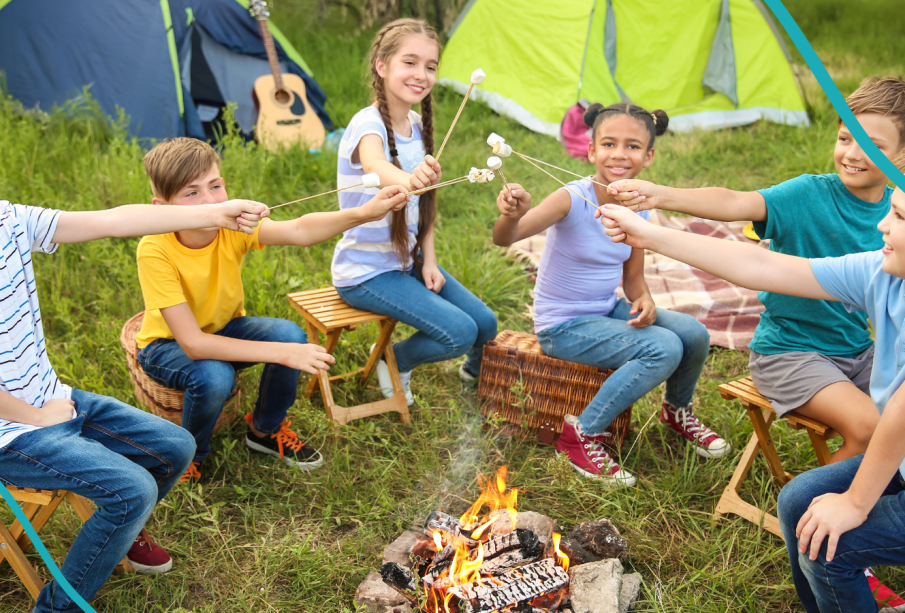
No camping trip is complete without s’mores, but you can upgrade this classic tradition by turning it into an interactive culinary station. Instead of the standard graham crackers, milk chocolate, and marshmallows, provide an array of gourmet alternatives.
Set out small bowls filled with ingredient options such as:
-
Chocolate chip cookies and fudge striped cookies
-
Peanut butter cups and white chocolate bars
-
Sliced bananas and fresh strawberries
-
Pretzel thins for a salty-sweet combination
-
Flavored marshmallows, such as toasted coconut or strawberry
If you have a backyard fire pit, teach the kids how to safely roast their marshmallows using long metal skewers. If a fire pit is not an option, a portable tabletop marshmallow roaster or even a clean terra cotta pot lined with foil and filled with charcoal briquettes can serve as a safe, controlled roasting station.
6. Stargaze with an Educational Twist
A clear night offers the perfect opportunity to introduce children to astronomy. Lay out a large waterproof tarp on the grass and cover it with heavy blankets and pillows so everyone can lie flat on their backs comfortably.
Download a free astronomy app on your smartphone before heading out. These apps allow you to point your phone at the sky to identify constellations, planets, and passing satellites in real time. Teach the kids how to locate the North Star, the Big Dipper, and Orion. To make it more engaging, share the mythological stories behind the shapes they see in the stars.
7. Tell Shadow Puppet and Campfire Stories
As bedtime approaches and the energy winds down, gather inside the tent or around the fire pit for traditional storytelling. Skip the genuinely terrifying ghost stories if you want your kids to actually sleep through the night in the tent. Instead, opt for suspenseful, funny, or mystery-driven tales.
Inside the tent, you can use a flashlight aimed at the tent wall to create shadow puppets. Teach the kids how to form interlocking hands to create birds, deer, dogs, and wolves. You can even challenge them to improvise a short play using only their hands and the flashlight beam.
8. Organise an After-Dark Flashlight Tag Tournament
Flashlight tag is a classic neighborhood game that feels entirely fresh within the boundaries of a backyard campsite. The rules are simple: the person who is “It” carries a flashlight and counts to thirty while everyone else hides in designated areas of the yard.
Instead of physically tagging players, the person who is “It” must spot a hider and illuminate them with the flashlight beam while calling out their name. To ensure safety, establish clear boundaries before the game begins, removing any tripping hazards like garden hoses, lawn tools, or low-hanging branches from the play area.
9. Cook an Authentic Campfire Breakfast
The camping experience does not end when the sun comes up. Keep the momentum going by cooking breakfast outside on the grill, a camp stove, or over the embers of the fire pit.
Making breakfast over an open flame introduces kids to outdoor cooking techniques. You can bake eggs and bacon inside foil packets, toast bagels directly over the grate, or cook pancakes on a cast-iron skillet. Serve the meal in metal camp mugs and plates to maintain the rustic atmosphere before officially packing up the campsite.
10. Document the Adventure with Nature Journaling
Give each child a small, blank notebook and a pack of colored pencils to act as their official camp journal. Throughout the weekend, encourage them to document their backyard expedition.
They can sketch the leaves they find, press fallen flowers between the pages, write down the birds they hear in the morning, or write a fictional story about a backyard wilderness explorer. This activity provides a quiet, focused break during the day and leaves them with a handmade souvenir of their backyard camping trip.
                                 _ . - - - . _
                               _ . '           ' . _
                             _ .                   . _
                           _ .                       . _
                         _ .                           . _
                       _ .                               . _
                     _ .                                   . _
                   _ .       / \                   / \       . _
                 _ .        /   \                 /   \        . _
               _ .         /     \               /     \         . _
             _ .          /       \             /       \          . _
           _ .           /         \           /         \           . _
         _ .            /           \         /           \            . _
       _ .             /             \       /             \             . _
     _ .              /_______________\     /_______________\              . _
   _ .                                                                       . _
 _ . ' - - - - - - - - - - - - - - - - - - - - - - - - - - - - - - - - - - - - - ' . _
Frequently Asked Questions
What should we do if it starts raining during our backyard campout?
Always check the weather forecast beforehand, but if an unexpected shower hits, you have two options. If the rain is light and your tent has a secure rainfly, listening to the rain fall on the tent fabric can actually be a cozy, peaceful experience for kids. However, if a thunderstorm develops, safety comes first. Move the entire operation indoors. You can pitch the tent right in the living room or build a massive blanket fort over the furniture so the camping spirit continues without the storm hazard.
How can I make sleeping on the hard ground comfortable for young children?
Kids are generally more resilient than adults when it comes to sleeping on the ground, but proper padding ensures they stay asleep through the night. Layer the bottom of the tent with foam interlocking gym mats or thick yoga mats to create a insulated barrier against the cold ground. On top of that, use inflatable camping pads, air mattresses, or even the cushions from your indoor outdoor patio furniture. Make sure each child has a proper pillow and a sleeping bag rated for the current nighttime temperature.
How do we handle bathroom breaks without ruining the camping illusion?
Establish a camp rule before the night begins to keep the experience authentic. Designate the indoor bathroom as the official park comfort station. To keep the illusion alive, kids must use their flashlights to navigate to the back door, remove their muddy outdoor shoes in the mudroom, and return directly to the campsite once they are finished. This mimics the real-world campground experience where facilities are a short walk away.
What are the best ways to keep bugs and mosquitoes away from the campsite?
To keep insects from ruining the evening, set up a multi-layered defense. Place Citronella candles or mosquito repellent lanterns around the perimeter of your seating area, ensuring they are kept away from flammable tent fabric. Apply an insect repellent containing DEET or picaridin to the children before twilight. Most importantly, enforce a strict zipper rule for the tent. The mesh door of the tent must be zipped shut immediately whenever someone enters or exits to prevent bugs from setting up camp inside your sleeping quarters.
Can we host a backyard campout if we do not own a real camping tent?
You absolutely do not need a retail camping tent to sleep under the stars. If the weather is dry and warm, you can build a large A-frame tarp tent using a clothesline stretched between two trees or posts. Simply drape a heavy tarp or canvas sheet over the line and weigh the corners down with heavy rocks or logs. Alternatively, you can create an open-air sleeping deck by laying down a large tarp, covering it with inflatable mattresses, and sleeping directly under the open sky.
How do I keep the kids warm if the temperature drops significantly overnight?
Nighttime temperatures can drop surprisingly fast, even in the summer. Dress the children in layers, starting with moisture-wicking thermal pajamas and wool socks. Avoid cotton clothing if it is damp from sweat or play, as cotton retains moisture and chills the body. Place an extra fleece blanket inside each sleeping bag, and ensure the tent is ventilated slightly at the top to prevent condensation from building up inside, which can make the air feel damp and cold.